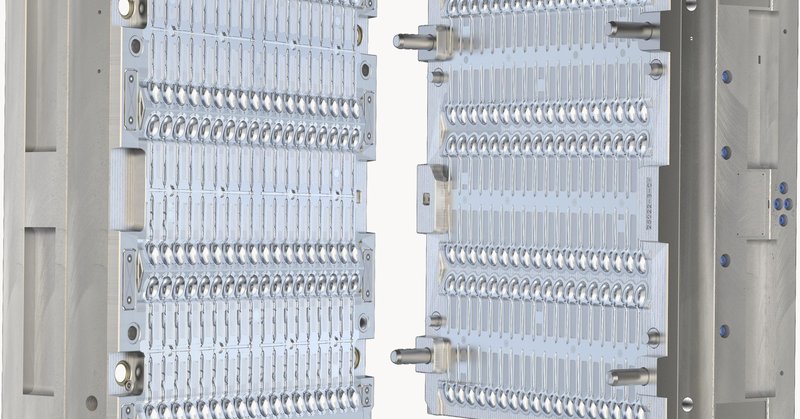
Thin-wall containers, buckets, crates, cutlery and household parts, from single-cavity to high-cavity. We design for your machine rather than for the catalogue, and we run trials before the mould ships.
We focus on the categories where tooling economics are clear and repeat orders are common. If your part falls outside these, send it anyway — we will tell you whether we can tool it.
Steel selection is not arbitrary — it follows from the resin, the volume and how long you intend to run the mould. We state the specification in the quotation so you know exactly what you are buying.
| Specification | Typical use | Notes |
|---|---|---|
| Pre-hardened mould base (1.2311 / 1.2312) | Short-run or low-volume production | Hardened to working hardness from manufacture. Economical for tooling that will not see high volume. |
| Corrosion-resistant mould base (1.2083 / 1.2316) | General packaging, household, medical | Good corrosion resistance, suitable for most thermoplastics. The usual default choice. |
| Hardened and tempered (H13 / 1.2344) | High-volume, abrasive or filled resins | Higher hardness and heat resistance. For glass or mineral-filled material and long production runs. |
| Hardened cavity inserts (SKD61) | Wear-critical detail areas | Inserts hardened and polished separately, where detail wear is a concern on long runs. |
| Polished cavity surfaces | Cosmetic and optical parts | For visible parts where surface quality matters and polish grade is specified. |
| Hot runner systems | Multi-cavity, long runner, colour critical | Where cycle time is dominated by runner cooling or where colour streaking from the runner is unacceptable. |
Resin matters for tooling, not just for the machine. Glass- and mineral-filled material is abrasive and needs harder cavities and higher tonnage. PVC releases corrosive gases and requires corrosion-resistant steel. Highly pigmented material hides a poor surface — and also hides the flash you should not be accepting. Tell us the resin and filler content up front.
Most disputes about new moulds are about fit and dimensions, not about quality. We resolve that here rather than in your plant.
Drawing or sample, resin, annual volume, destination port. We confirm feasibility and the cavity count we would recommend.
Steel specification, cavity count, lead time, price and machine fitting recommendation — all in writing before anything starts.
Cavity machining, hardening where specified, insert fitting and cooling circuit installation. Typically 30 to 45 days for a simple single-cavity mould, 60 to 90 for complex high-cavity tooling.
Trials run, dimensions verified, trial report and samples prepared, then export packing and shipping to your port with the documentation.
Cavity count is chosen against your volume and cycle requirement, not upsold — if one cavity meets your annual volume, we will tell you rather than quote four. Trials are run before shipment and the trial report goes with the mould. If the mould arrives and does not fit or does not match the drawing, contact us and we will put it right at our cost. Third-party inspection is available on request during manufacture.
Tell us the resin, the annual volume and your destination port. We will come back with the cavity count we recommend, the steel, the lead time and the price.