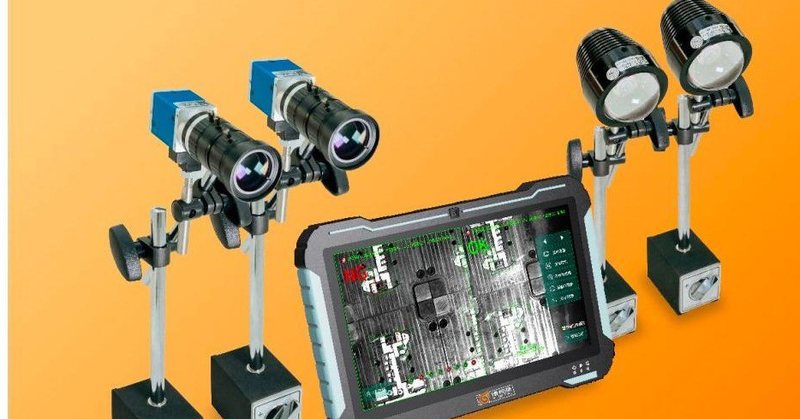
Mold protection stops the machine before it damages your tooling. Vision inspection catches what human eyes miss at speed — up to 1,000 pieces per minute, detecting defects above 0.2 mm with 360° coverage.
A mould closing on something it should not have is one of the few genuinely catastrophic failures in injection molding. The cost is not the mould — it is the scrapped part run, the machine downtime, and often the customer relationship that went with it. Mold protection is inexpensive by comparison.
Vision inspection is not magic. It catches what is visible, with enough contrast, at the speed you run. Understanding its limits is as important as understanding its capability — and any supplier who claims otherwise is selling you something you will be disappointed by.
Around 0.2 mm for typical contrast levels. But a 0.3 mm defect in a low-contrast dark part at high line speed may not hold. Send us your actual part and we will tell you what is achievable — including when the answer is that vision is not worth it for that defect.
Most failed vision installations fail on lighting and placement, not on the camera. This is where the real engineering work sits, and it is where we spend the time.
Detecting a defect is only useful if the part then gets removed before it reaches a carton. Air blow, mechanical rejector or line stop — the right choice depends on your part weight and line layout.
Multiply the cost of one defect reaching your customer by your annual volume, and compare that against the inspection cost. If your parts are internal, hidden or low value, manual inspection may genuinely be the better answer.
Bottle and preform production has its own set of failure modes that general part inspection does not cover. These systems check for the ones that matter in this process.
| Check | What it detects | Why it matters |
|---|---|---|
| Body and base inspection | Black spots, contamination, deformation, incomplete filling | Contamination in a beverage product is a recall risk, not a cosmetic issue |
| Neck and thread inspection | Thread deformation, missing or damaged thread | A damaged thread means the cap does not seal, and the product goes flat |
| Preform inspection | Preform defects including crystallisation, thread and gate defects | Catches problems at the preform stage rather than after blow moulding |
| Cap presence and torque | Missing cap, misaligned cap, incorrect cap type | Ensures the closure system is correct before the product leaves the line |
| Label verification | Missing, misaligned or wrong label | Reduces mislabelling risk in markets with strict labelling rules |
| Level and fill check | Fill level consistency across the batch | Catches underfill that would otherwise only show at customer complaint |
Note: inspection capability depends on line speed, container material (PET, PETG, HDPE), transparency and defect contrast. Transparent PET is generally easier to inspect than opaque or coloured material. Send samples and your line speed so we can confirm what holds.
Send your actual parts including known defective samples, plus a written list of the defects that matter to you. This is the single most useful thing you can provide.
We test your parts against your defects and tell you what is and is not detectable at your line speed — before you commit to anything.
Camera, lighting, controller and reject mechanism specified for your part and line. Delivered as a complete unit, not a camera you have to figure out.
Installation on your line, operator training, and a trial run on production parts. Threshold settings are tuned to your actual defect definition.
We will tell you if the defect you care about is not detectable at your speed, on your part, in your material. Vision inspection that cannot reliably catch your actual problem costs money and delivers nothing. Feasibility is tested on your samples first, and the result is communicated whether or not it helps us sell. Third-party inspection is available on request.
Include known defective samples if you can. We will test feasibility and tell you honestly what vision inspection can and cannot do for your application.