Three-axis traverse beam robots for straightforward take-out, multi-axis articulated robots when the pick is not straight down. Take-out robots from 50 to 1600 T, integrated with your machines rather than bolted on afterwards.
Most people start by asking for the most capable robot. The better question is what the task actually requires — an articulated robot doing simple drop take-out costs more and achieves no more.
Moves along a beam spanning the machine and places the part directly below the mould. Simple, fast and considerably cheaper than an articulated arm.
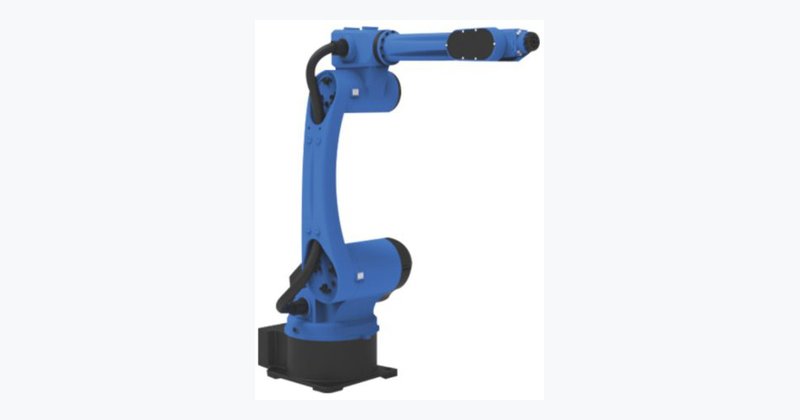
A jointed arm with several axes of movement, so it can reach into the mould, handle inserts, pick from a conveyor and stack elsewhere — all in one program.
Robot sizing follows the machine, not the other way round. A larger machine needs longer reach and higher payload. These are the ranges we supply.
| Machine tonnage | Robot type | Typical payload | Application |
|---|---|---|---|
| 50 – 150 T | Traverse beam | up to ~1.5 kg | Small housings, caps, laboratory parts, thin-wall packaging |
| 200 – 400 T | Traverse beam | up to ~3 kg | Household parts, containers, buckets, thin-wall tubs |
| 500 – 800 T | Traverse beam or 5-axis | up to ~8 kg | Crates, boxes, appliance parts, larger containers |
| 900 – 1300 T | 5-axis / 6-axis articulated | up to ~20 kg | Automotive interior, large housings, insert loading |
| 1400 – 1600 T | 6-axis articulated | up to ~40 kg | Large automotive, heavy duty, combined pick and place |
Sizing note: payload figures are nominal and must be checked against the part weight, the reach distance and the gripper. A heavy gripper reduces the effective payload. Send the part weight and the reach distance and we will confirm the model rather than guess from tonnage alone.
Two different things are often confused when people evaluate robots: removing an operator from the task, and removing the cycle time limit that the operator imposes. The second is usually worth more — and it is the one most people underestimate.
Part weight, shape, how it is currently taken out, where it needs to go, and what the surrounding layout looks like. This determines the model.
The gripper decides whether the part survives handling. Vacuum, soft-grip or mechanical, chosen against the part surface and weight — not just the size.
Safety wiring, ejector position signals and handshake with the machine control, so the robot and the mould cycle stay synchronised.
Programming on your mould and your parts, cycle time measured against your current setup, and operators trained to change gripper settings safely.
The robot is sized against your part weight and reach distance, not rounded up to the next model to make the number look better. The gripper is specified for your part surface rather than supplied as a default. We will tell you if a traverse beam robot will do the job instead of an articulated arm. If you need vision inspection alongside the robot, tell us at the same time so the layout accounts for both from the start rather than being retrofitted awkwardly later. Third-party inspection is available on request.
Tell us the machine tonnage, the part weight and where the part needs to go. We will recommend the robot type and model — and say so if manual handling is the better answer.