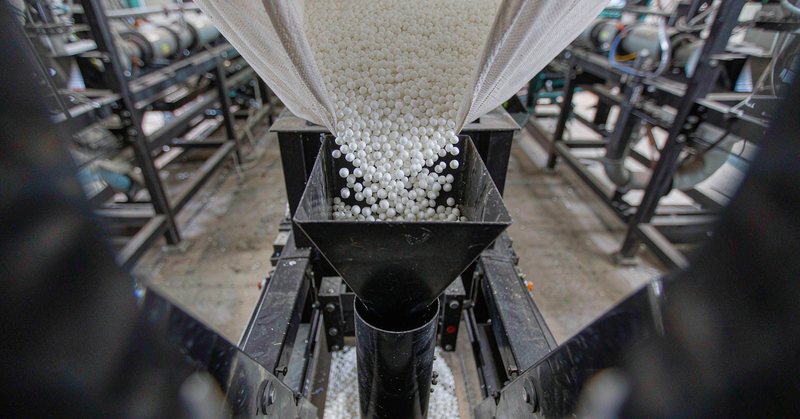
PP, PE, ABS, PA and PC in the grades your application actually needs, supplied with data sheets. Sold alongside the machines and wear parts, so the resin and the screw design get specified together instead of turning into a production problem later.
These are the resins we handle most. Within each family there are many grades — injection grades versus blow or fibre grades, virgin versus recycled, natural versus coloured, filled versus unfilled. If you need something specific, send the requirement and we will confirm what can be sourced.
| Resin | Common applications | Typical grades held | Processing note |
|---|---|---|---|
| PP (Polypropylene) | Packaging, crates, buckets, caps, containers, fibre | Injection, raffia, homopolymer, copolymer | Low density, low shrinkage — good for thin-wall, moulds easily |
| PE (HDPE) | Bottles, drums, crates, pipes, boxes | Injection, blow, high-density grades | Stiff and tough, good chemical resistance |
| PE (LDPE / LLDPE) | Films, bags, caps, flexible packaging | Film and injection grades | Flexible and transparent, good for film and soft-touch parts |
| ABS | Appliance housings, automotive interior, electronics casings, toys | General, high-impact, flame-retardant, ABS/PC | Rigid, easy to mould and finish, good surface quality |
| PA (Nylon 6 / 6+6) | Gears, bushings, connectors, automotive, electrical | Unfilled, glass-filled (typically 15–33%), MCPA | Tough and wear-resistant; must be dried properly before moulding |
| PC (Polycarbonate) | Optical parts, housings, medical devices, lenses, sight windows | General, optical, flame-retardant, PC/ABS, PC/PBT | High impact and transparent; needs drying and careful melt temperature control |
| PET / PBT | Preforms, containers, electrical components, connectors | PET preform, bottle, PBT GF grades | PBT for electrical due to heat and creep resistance |
| POM (Acetal) | Gears, bushings, snap fits, precision parts | Homopolymer, copolymer, GF grades | Hard, accurate, self-lubricating; used where dimensional stability matters |
| HIPS | Displays, packaging, stationery, housings | General, high-impact | Cost-effective alternative to ABS where impact requirement is modest |
Also available on request: TPU, TPE, PPS, LCP, PSU, PMMA, PBT, EVA and blends. Filled, flame-retardant, UV-stabilised and coloured grades can be sourced. Send the application, not the resin name — tell us what the part has to do and we will work out the grade.
Both are legitimate. The mistake is choosing recycled for an application that cannot tolerate it — and that mistake usually surfaces as inconsistent parts weeks later. Here is how to decide.
What does the part do? Is it food contact, medical, automotive, electrical, structural or cosmetic? This determines almost everything else.
A brand and grade designation we can quote against. If you do not have one, describe the part instead and we will propose a grade and explain why.
If glass or mineral filled, the percentage. This changes impact strength, shrinkage, screw choice and drying, so it must be right.
Natural, black, white, or a specific colour with a reference. Colour matching to a Pantone or an existing part is possible — tell us which.
Annual and per-order quantity. Standard export packaging is 25 kg bags on pallets; other formats can be arranged.
For the freight quotation and to confirm any documentation the destination country requires.
Because the resin and the machine are one decision, not two. The wrong grade on the wrong screw produces poor plasticising, unstable shot weight and inconsistent dimensions — and the usual response is to blame the machine. If you buy the machine from us, send us the resin and the part and we will specify the screw and the drying together. That removes a whole class of commissioning problems, and it costs you nothing. Data sheets are supplied with every order. Third-party inspection is available on request.
Send the application, the volume and your destination port. We will propose a grade, supply the data sheet and quote — usually within 4 hours on business days.